The Complete Guide to Commercial Roofing Systems: Types, Applications, and What’s Right for Your Building
When it comes to protecting your commercial property investment, few decisions are as critical as selecting the right roofing system. Unlike residential roofing, commercial roofs must withstand unique challenges—from supporting heavy HVAC equipment to managing water drainage across expansive flat surfaces. With numerous roofing materials and systems available, understanding which option best suits your building’s specific needs can feel overwhelming.
At CSI Commercial Roofers, we’ve spent years helping businesses throughout the Dallas/Fort Worth metroplex make informed decisions about their commercial roofing needs. Whether you’re constructing a new facility, replacing an aging roof, or simply exploring your options, this comprehensive guide will walk you through the most common types of commercial roofing systems, their ideal applications, and the factors that should influence your selection.
Understanding Commercial Roofing Types: Why Are They Different?
Before diving into specific roofing types, it’s important to understand what sets commercial roofing apart from residential applications. Commercial buildings typically feature low-slope or flat roof designs that require specialized materials and installation techniques. These roofs must accommodate foot traffic for maintenance, support mechanical equipment, and manage water drainage efficiently across large surface areas.
Commercial roofing systems also need to meet stringent building codes, provide energy efficiency, and deliver long-term durability that justifies the significant investment. The right choice depends on multiple factors including your building’s structure, local climate conditions, budget constraints, and long-term maintenance considerations.
TPO Roof
Advantages of TPO Roofing
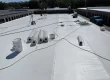
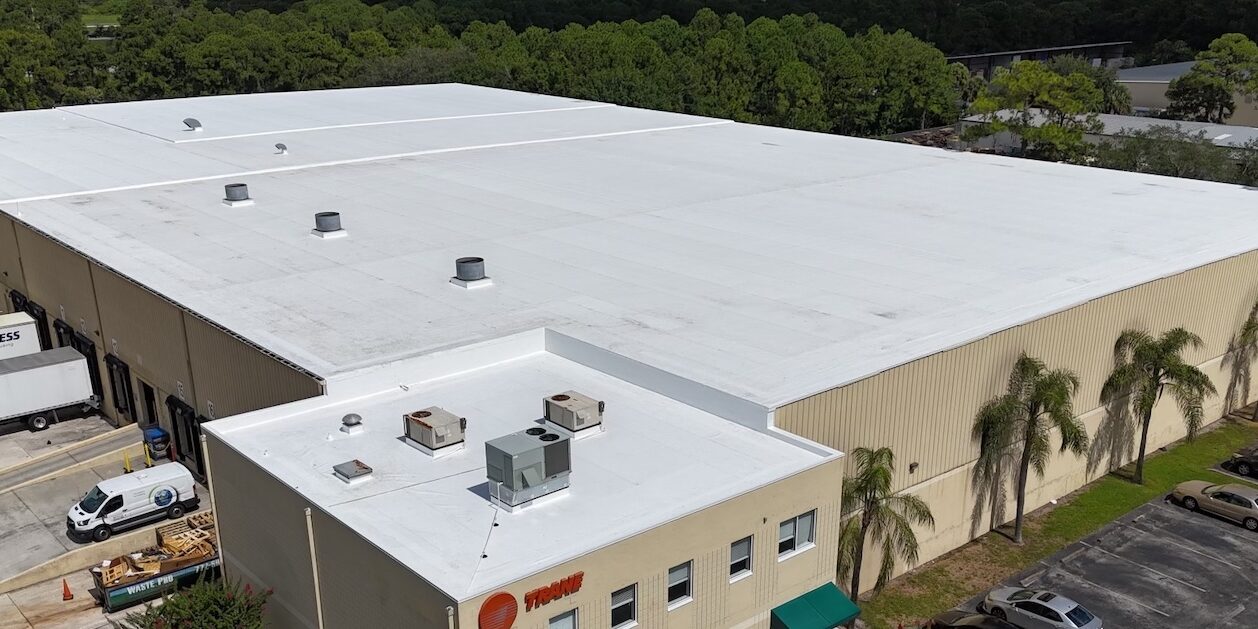
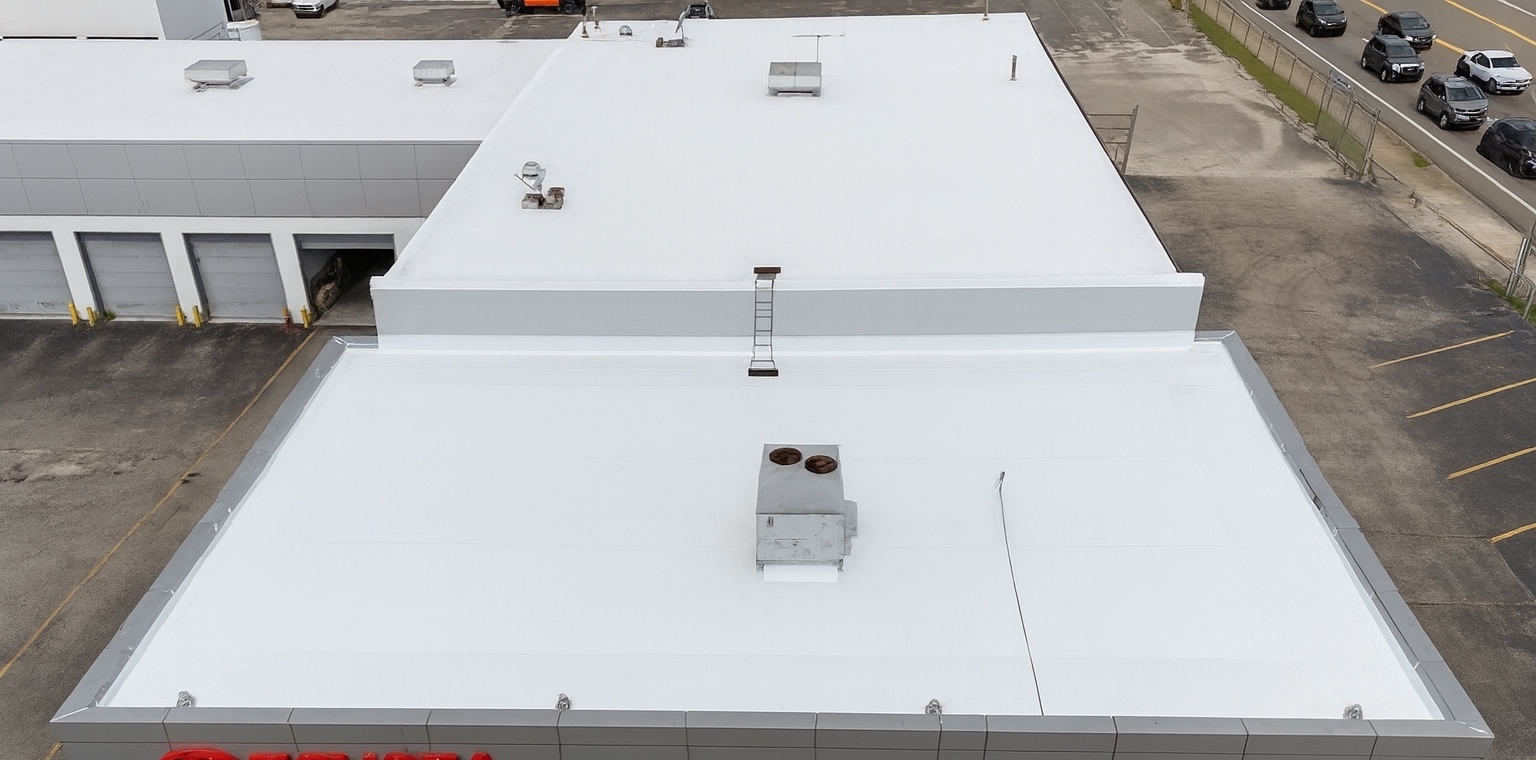
The widespread adoption of TPO roofing stems from its impressive combination of benefits. The bright white surface provides excellent reflectivity, helping reduce cooling costs during hot Texas summers—a significant advantage for businesses in the Dallas/Fort Worth area. TPO membranes resist ultraviolet radiation, ozone, and chemical exposure, making them durable in various environments.
Installation costs for TPO tend to be more economical than many alternatives, and the heat-welded seams create incredibly strong bonds that resist leaks better than adhesive-based systems. TPO roofing also requires relatively minimal maintenance when properly installed, and its flexibility allows it to accommodate building movement without cracking.
Best Applications for TPO
TPO roofing works exceptionally well for warehouses, distribution centers, retail buildings, office complexes, and manufacturing facilities. Its affordability makes it particularly attractive for large commercial buildings where roofing costs can quickly escalate. If your building has a relatively simple roof design without numerous penetrations or complex details, TPO offers an excellent balance of performance and value.
Metal Retrofit Commercial Roof System
Metal Roofing Systems
What Are Commercial Metal Roofs?
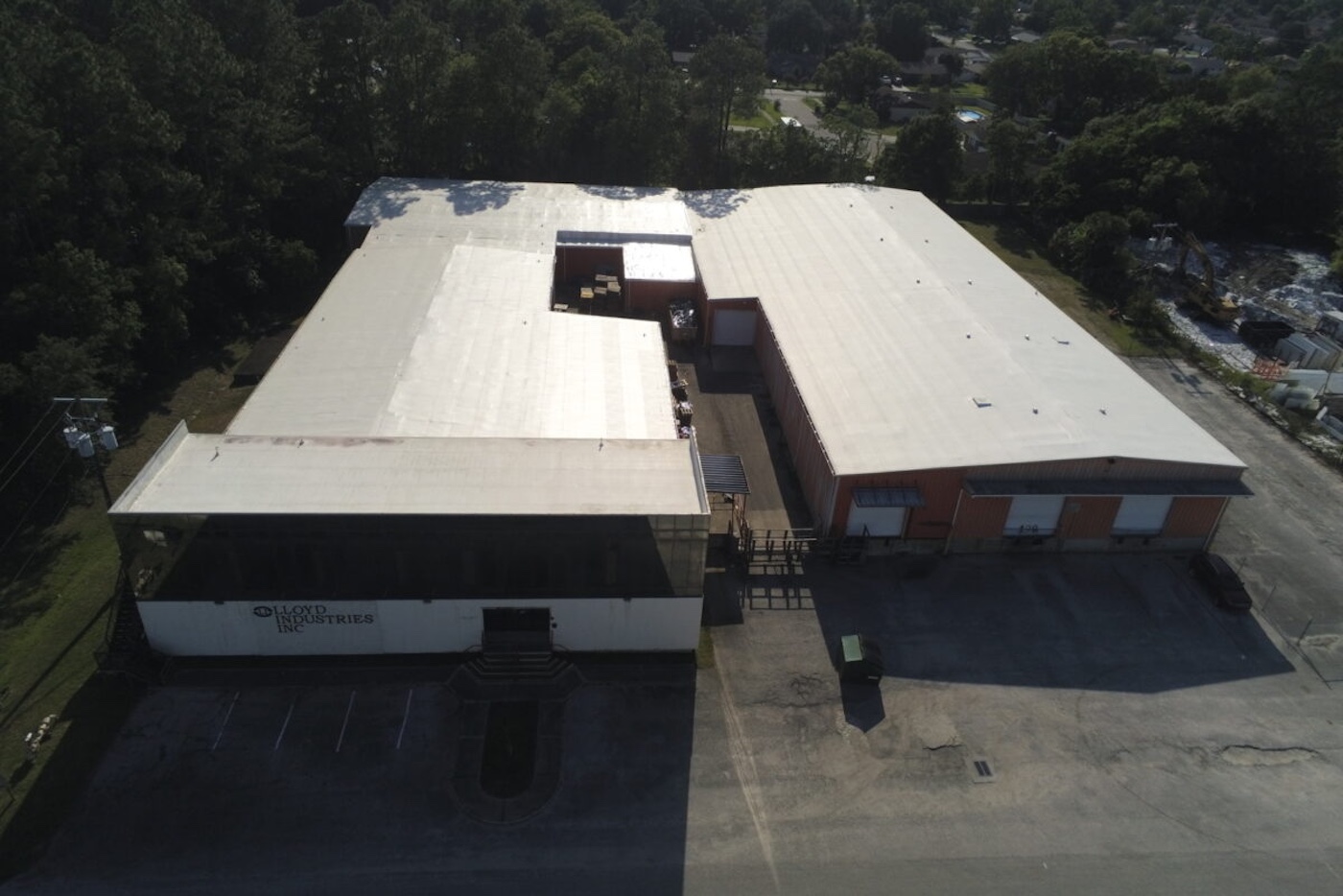
Commercial metal roofing encompasses various products including standing seam systems, metal panels, and structural metal decking. These systems feature interlocking panels made from steel, aluminum, zinc, or copper that provide both the waterproofing layer and structural support.
Advantages of Metal Roofing
Metal roofing systems deliver exceptional longevity, often lasting 40-70 years with minimal maintenance. The material is non-combustible, providing superior fire protection, and its low weight reduces structural requirements. Metal roofs shed water and snow efficiently, preventing ponding and ice dam issues.
Modern metal roofing offers excellent energy efficiency, particularly with reflective coatings, and the material is fully recyclable at the end of its service life. Standing seam systems accommodate building movement and thermal expansion through their design, reducing stress on fasteners and seams. Metal roofs also provide a distinctive architectural appearance that many building owners prefer.
Best Applications for Metal Roofing
Metal roofing excels on buildings with sufficient slope for water drainage, facilities prioritizing sustainability and lifecycle costs over initial investment, structures requiring superior fire resistance, and properties where architectural appearance plays an important role. Manufacturing facilities, agricultural buildings, institutional structures, and high-end commercial developments frequently specify metal roofing systems.
PVC Roof Option
PVC Roofing (Polyvinyl Chloride)
What Is PVC Roofing?
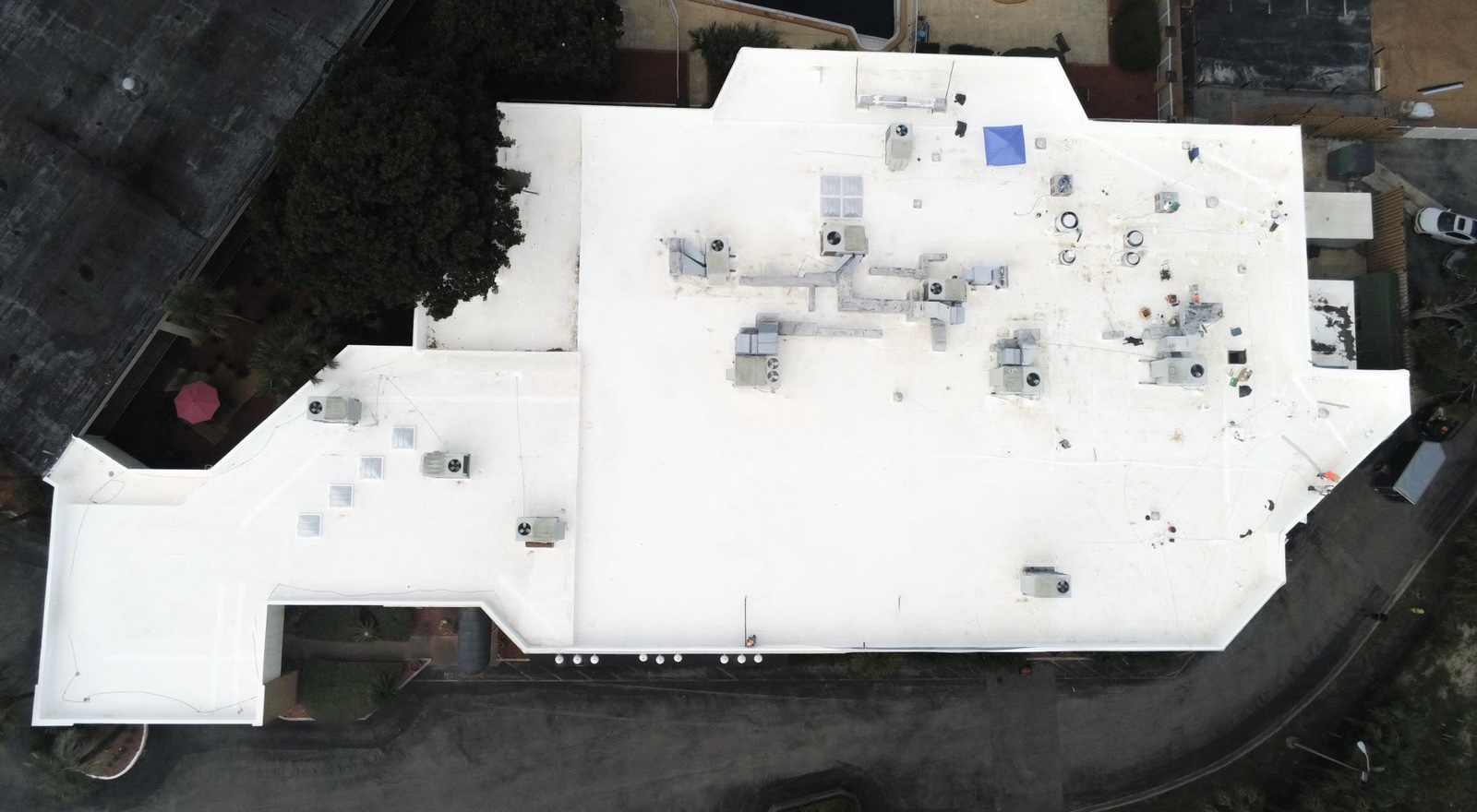
PVC roofing represents a premium single-ply membrane option that has served commercial applications since the 1960s. Like TPO, PVC membranes are heat-welded at the seams, but the chemical composition differs, providing distinct performance characteristics.
Advantages of PVC Roofing
PVC roofing stands out for its exceptional durability and chemical resistance. The material resists grease, oils, and chemicals better than most alternatives, making it ideal for restaurants and industrial facilities. PVC membranes are inherently fire-resistant and provide excellent protection against punctures and tears.
The light-colored surface reflects solar heat efficiently, contributing to lower cooling costs. Heat-welded seams create incredibly strong bonds—often stronger than the membrane itself—virtually eliminating seam failures. PVC also resists algae and bacterial growth, maintaining its appearance and performance over time.
Best Applications for PVC
PVC roofing is the top choice for restaurants where grease and oils might come into contact with the roof, industrial facilities handling chemicals, healthcare facilities requiring superior cleanliness, and any commercial building where maximum durability justifies the higher initial investment. If your building has rooftop equipment requiring frequent maintenance access, PVC’s puncture resistance provides added protection.
EPDM Roof
EPDM Roofing (Ethylene Propylene Diene Monomer)
What Is EPDM Roofing?
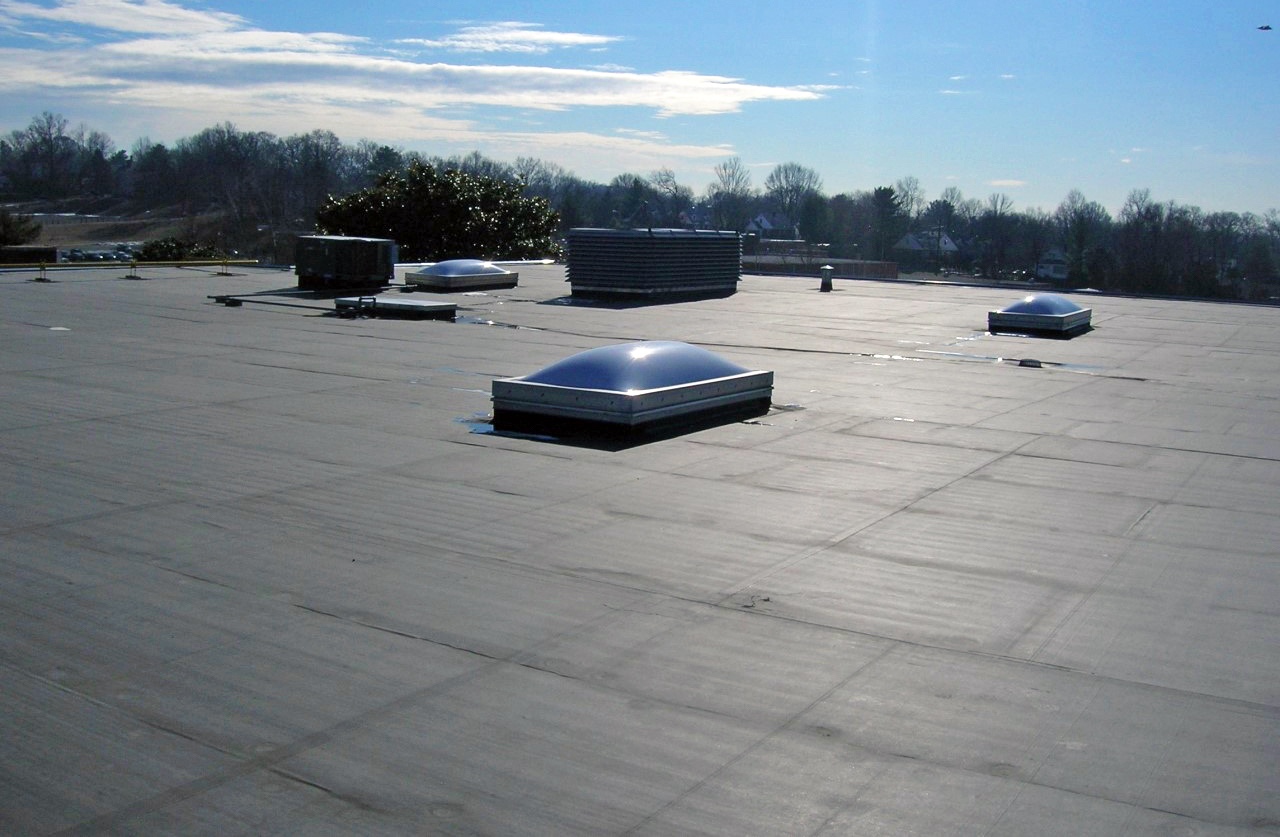
Often called “rubber roofing,” EPDM has served as a trusted commercial roofing solution for over 60 years. This synthetic rubber membrane typically comes in black sheets that are mechanically attached, fully adhered, or ballasted to the roof deck.
Advantages of EPDM Roofing
EPDM roofing has earned its reputation through decades of proven performance. The material demonstrates exceptional durability, with many EPDM roofs lasting 30 years or more when properly maintained. It resists ozone, ultraviolet radiation, and extreme temperature fluctuations—important qualities for Texas weather conditions.
EPDM installation is relatively straightforward and cost-effective, making it one of the most budget-friendly commercial roofing options available. The material’s flexibility helps it resist cracking even during thermal cycling, and it requires minimal maintenance throughout its service life. EPDM membranes are also recyclable, offering environmental benefits at the end of their lifespan.
Best Applications for EPDM
EPDM roofing excels on low-slope commercial buildings where energy efficiency isn’t the primary concern. It’s particularly well-suited for warehouses, industrial facilities, storage buildings, and back-of-house areas where the dark color won’t significantly impact cooling costs. Many building owners choose EPDM for its proven track record and straightforward repairs when damage occurs.
Flute Fill EPS
Flute Fill EPS Roofing Systems
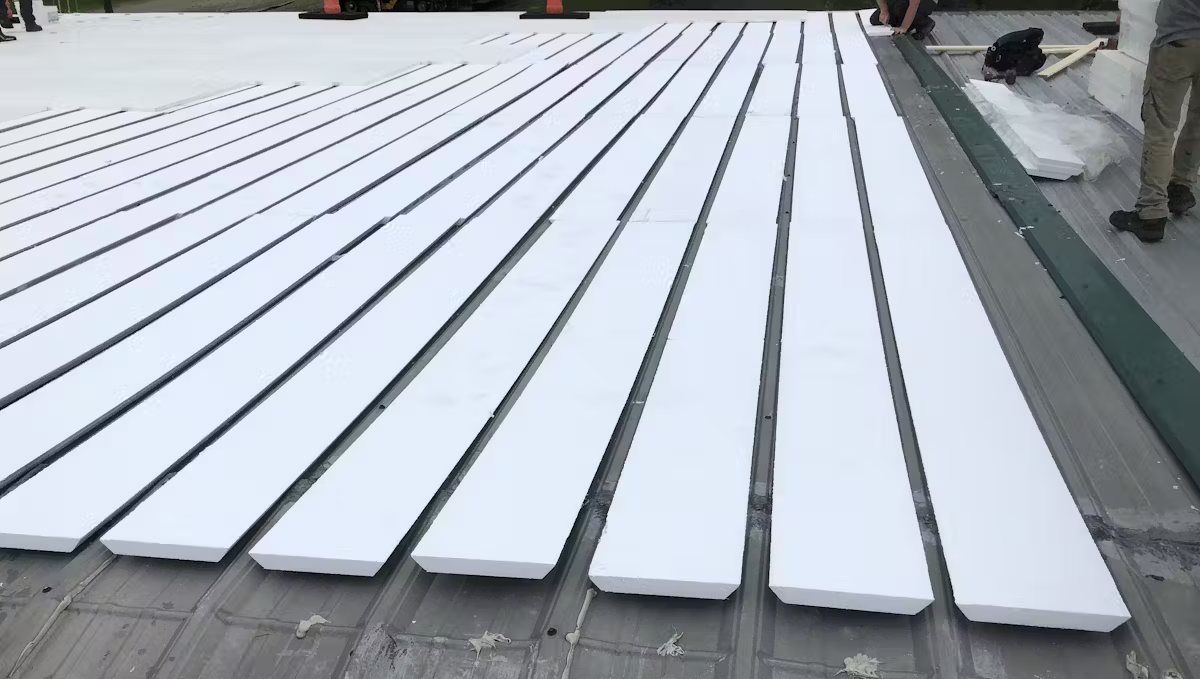
Flute fill EPS (Expanded Polystyrene) represents a specialized insulation solution designed specifically for metal deck commercial roofing applications. When roofing membranes are installed over metal decks with fluted or corrugated profiles, the gaps between the deck’s raised ribs create air pockets that reduce insulation effectiveness and can allow moisture infiltration. Flute fill EPS precisely fills these voids with rigid foam insulation, creating a smooth, level surface that maximizes thermal performance and provides a stable substrate for the roofing membrane. This system proves particularly valuable in warehouses, manufacturing facilities, and distribution centers where metal deck construction is common. The lightweight nature of EPS makes it ideal for structures where minimizing roof load is important, while its excellent compressive strength ensures it won’t crush under the weight of roofing materials, equipment, or maintenance traffic.
Beyond simply filling voids, flute fill EPS systems deliver significant energy efficiency improvements by eliminating thermal bridging through the metal deck and creating continuous insulation across the entire roof assembly. The closed-cell structure of EPS resists moisture absorption, preventing condensation problems that can plague metal deck roofs in our Dallas/Fort Worth climate where temperature differentials between conditioned interior spaces and hot exterior surfaces create ideal conditions for condensation. CSI Roofers frequently recommends flute fill EPS for both new construction and re-roofing projects on metal deck buildings, as the modest investment in proper insulation typically pays for itself within just a few years through reduced energy costs while extending the roofing system’s lifespan by providing superior protection against thermal stress and moisture-related deterioration. Whether you’re constructing a new facility with metal deck or replacing an existing roof that’s under performing thermally, flute fill EPS deserves serious consideration as part of your complete commercial roofing system.
Build-Up Roofing
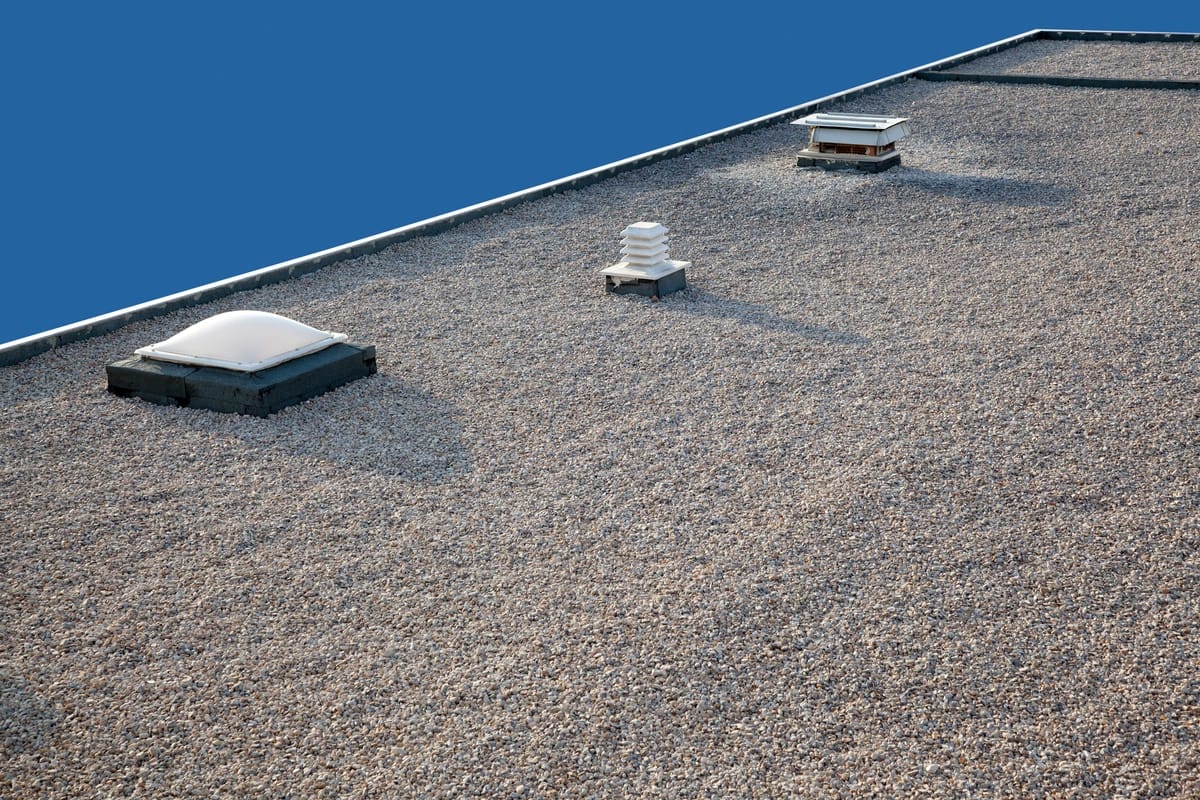
Built-Up Roofing (BUR)
What Is Built-Up Roofing?
Built-up roofing represents one of the oldest and most proven commercial roofing systems, sometimes called “tar and gravel” roofing. The system consists of multiple layers of bitumen (asphalt or coal tar) alternated with reinforcing fabrics, topped with an aggregate surface or mineral cap sheet.
Advantages of Built-Up Roofing
Built-up roofing offers unmatched redundancy—the multiple layers create a fail-safe system where minor damage to one layer doesn’t compromise the entire roof. The aggregate surface provides excellent protection against physical damage, UV radiation, and even fire. When properly installed and maintained, BUR systems can last 30 years or more.
The weight and multi-layer construction create a robust roof that withstands severe weather, and the material can be customized with different types of bitumen and reinforcing fabrics to meet specific performance requirements. Built-up roofs also accommodate foot traffic well, making them practical for buildings requiring frequent roof access.
Best Applications for Built-Up Roofing
BUR systems work well for buildings with structural capacity to support the additional weight, facilities requiring heavy foot traffic or equipment installation, and properties where the proven track record and redundancy of traditional roofing justify the higher installation cost. Many industrial facilities, older commercial buildings, and high-traffic applications still rely on built-up roofing systems.
Modified Bitumen Roof
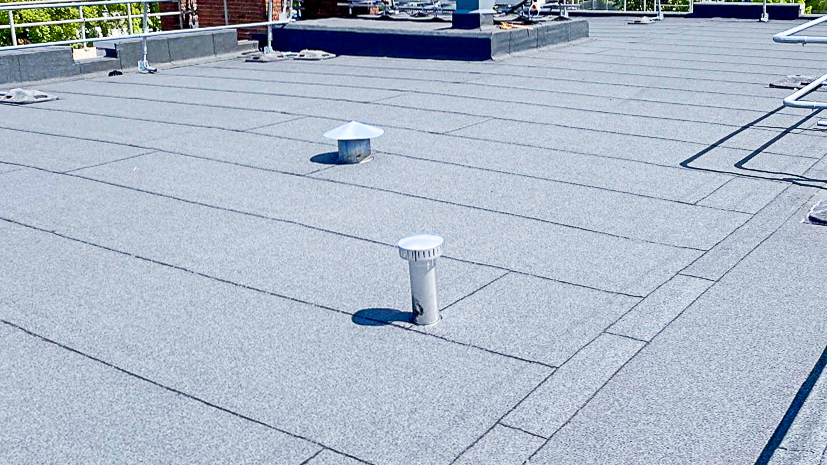
Modified Bitumen Roofing
What Is Modified Bitumen?
Modified bitumen roofing evolved from built-up roofing technology, incorporating rubber or plastic polymers into the asphalt to enhance performance. The system typically consists of one or two plies of modified bitumen sheet material that’s torch-applied, hot-mopped, cold-applied, or self-adhered to the roof deck.
Advantages of Modified Bitumen Roofing
Modified bitumen roofing combines the proven performance of built-up roofing with modern materials technology. The polymer modification improves flexibility, allowing the material to expand and contract with temperature changes without cracking. Modified bitumen offers excellent tensile strength and elongation properties, resisting tears and punctures effectively.
The material performs reliably across a wide temperature range, making it well-suited for Texas climate extremes. Surface granules provide UV protection and improve fire resistance, while multiple installation methods allow contractors to select the best approach for each project’s specific conditions.
Best Applications for Modified Bitumen
Modified bitumen works exceptionally well for buildings requiring a durable, cost-effective roofing solution with good thermal performance. It’s popular for retail centers, multi-family residential buildings, schools, government facilities, and any commercial structure where proven performance and reasonable cost intersect. The material handles foot traffic reasonably well and can accommodate moderate building movement.
Factors to Consider When Choosing a Commercial Roof
Climate Considerations for Dallas/Fort Worth
The Dallas/Fort Worth metroplex presents specific climate challenges that should influence your roofing decision. Our region experiences intense summer heat, occasional severe storms with high winds and hail, and temperature fluctuations that stress roofing materials. Reflective roofing systems like TPO, PVC, or coated metal can significantly reduce cooling costs during our extended summer season. Hail resistance becomes important given our exposure to severe spring thunderstorms.
Building Structure and Load Capacity
Your building’s structural design directly impacts which roofing systems you can consider. Older buildings may lack the capacity to support heavy systems like built-up roofing, making lightweight options like TPO or SPF more appropriate. The roof slope also matters—while most commercial buildings feature low-slope designs suitable for membrane systems, adequate drainage remains essential to prevent ponding water that shortens roof lifespan.
Budget and Lifecycle Costs
Commercial roofing decisions should consider both initial installation costs and long-term lifecycle expenses. While premium materials like PVC or metal roofing cost more upfront, their extended lifespan and lower maintenance requirements often provide better value over 20-30 years. TPO and EPDM offer more affordable initial costs, making them attractive for budget-conscious projects or buildings with shorter expected occupancy.
Energy efficiency also impacts lifecycle costs significantly. Reflective roofing systems can reduce cooling costs by 10-25% in our Texas climate, with savings accumulating substantially over the roof’s lifespan. Consider available tax credits, utility rebates, and LEED certification benefits when calculating true project costs.
Maintenance Requirements
Different roofing systems demand varying maintenance levels. Single-ply membranes generally require minimal maintenance—primarily inspection and basic cleaning. Built-up and modified bitumen systems may need periodic recoating or surfacing renewal. SPF roofs require recoating every 10-15 years to maintain warranty coverage and performance.
Metal roofs need little maintenance beyond occasional inspection and fastener checks, while all systems benefit from regular debris removal, drain cleaning, and professional inspections to catch minor issues before they become major problems.
Building Use and Roof Access
Consider how your building uses the roof space. Facilities with extensive rooftop HVAC equipment need durable roofing that withstands frequent maintenance traffic—PVC, built-up roofing, or properly protected TPO work well. Buildings planning future equipment additions benefit from systems that accommodate modifications easily. Restaurants and food service facilities should prioritize chemical-resistant options like PVC.
The Importance of Professional Installation
Even the highest-quality roofing materials will underperform or fail prematurely if improperly installed. Commercial roofing demands experienced contractors who understand material-specific installation techniques, proper substrate preparation, detail work around penetrations and edges, and quality control procedures that ensure long-term performance.
At CSI Roofers, our installation teams receive ongoing training on the latest materials and methods, and we maintain manufacturer certifications for the roofing systems we install. This expertise ensures your roof performs as designed, often extending lifespan and improving energy efficiency compared to marginal installations.
Commercial Roofing Maintenance and Repair
Preventive Maintenance Programs
The most cost-effective approach to commercial roofing involves preventive maintenance that identifies and addresses minor issues before they escalate into expensive repairs or premature replacement. Regular inspections—typically twice yearly plus after severe weather events—allow trained professionals to spot early warning signs like membrane degradation, loose fasteners, damaged flashing, or drainage problems.
Professional maintenance programs include debris removal, drain cleaning, minor repairs, and detailed documentation that tracks your roof’s condition over time. This documentation proves invaluable for warranty compliance, budgeting future repairs, and demonstrating proper care if insurance claims become necessary.
Emergency Repair Services
Roofing emergencies don’t respect business hours. Severe storms, equipment malfunctions, or unexpected damage can compromise your roof at any time, potentially causing water intrusion that damages inventory, equipment, and building contents. Rapid response becomes critical to minimize losses and protect your business operations.
CSI Roofers provides 24/7 emergency repair services throughout the Dallas/Fort Worth metroplex. Our emergency response team can assess damage, implement temporary protection, and develop permanent repair solutions that restore your roof’s integrity quickly. Whether facing storm damage, equipment impact, or sudden leaks, you can count on our rapid response to protect your property.
Why Choose CSI Roofers for Your Commercial Roofing Needs
Comprehensive Commercial Roofing Services
CSI Roofers offers complete commercial roofing services including new roof installation, tear-off and replacement, roof restoration and coating systems, emergency repairs and temporary protection, preventive maintenance programs, and roof inspections and condition assessments. Our experience spans all major commercial roofing systems, allowing us to recommend the best solution for your specific situation rather than pushing a single product.
Serving the Dallas/Fort Worth Metroplex
As a locally-based commercial roofing contractor, we understand the unique challenges facing buildings in the Dallas/Fort Worth area. Our experience with Texas weather patterns, local building codes, and regional construction practices ensures your project proceeds smoothly and your roof performs reliably in our specific climate.
We’ve built our reputation serving businesses throughout the metroplex, from small office buildings to large industrial complexes. Our local presence means faster response times for service calls, emergency repairs, and routine maintenance visits.
Free Estimates and Consultations
Understanding your roofing options and costs shouldn’t require commitment. CSI Roofers provides free, no-obligation estimates for all commercial roofing projects. Our estimators will visit your property, assess your existing roof or new construction requirements, discuss your goals and constraints, and provide detailed pricing for recommended solutions.
We take time to explain your options, answer questions, and help you make an informed decision that balances performance, longevity, and budget considerations. There’s never pressure or obligation—just honest, professional guidance from experienced roofing specialists.
24/7 Emergency Services
Roofing emergencies demand immediate attention. CSI Roofers maintains emergency response capabilities around the clock, every day of the year. When you call our emergency line, you’ll reach a knowledgeable professional who can dispatch our emergency response team quickly to assess damage and implement protective measures.
Our emergency services include temporary repairs to stop active leaks, tarp installation and securing, emergency drainage solutions, storm damage assessment, and coordination with insurance adjusters. We understand that minimizing business disruption and protecting your property takes priority during roofing emergencies.
Making Your Commercial Roofing Decision
Selecting the right commercial roofing system represents a significant investment that will impact your property’s protection, energy costs, and maintenance expenses for decades. While this guide provides comprehensive information about available options, every building presents unique considerations that benefit from professional evaluation.
The experienced team at CSI Roofers stands ready to assess your specific situation, discuss your priorities and constraints, and recommend roofing solutions that deliver optimal performance and value. Whether you’re constructing a new facility, replacing an aging roof, or exploring options for a future project, we invite you to contact us for a free consultation and estimate.
Contact CSI Roofers Today
Ready to discuss your commercial roofing project? Contact CSI Roofers today to schedule your free estimate. Our knowledgeable team will answer your questions, assess your needs, and provide honest recommendations that put your property’s best interests first.
For emergency roofing services, call our 24/7 emergency line—we’re always ready to respond when you need us most.
About CSI Roofers: CSI Roofers is a leading commercial roofing contractor serving the Dallas/Fort Worth metroplex. With extensive experience in all major commercial roofing systems, we provide installation, repair, maintenance, and emergency services for businesses throughout North Texas. Our commitment to quality workmanship, customer service, and professional integrity has earned us the trust of commercial property owners across the region.